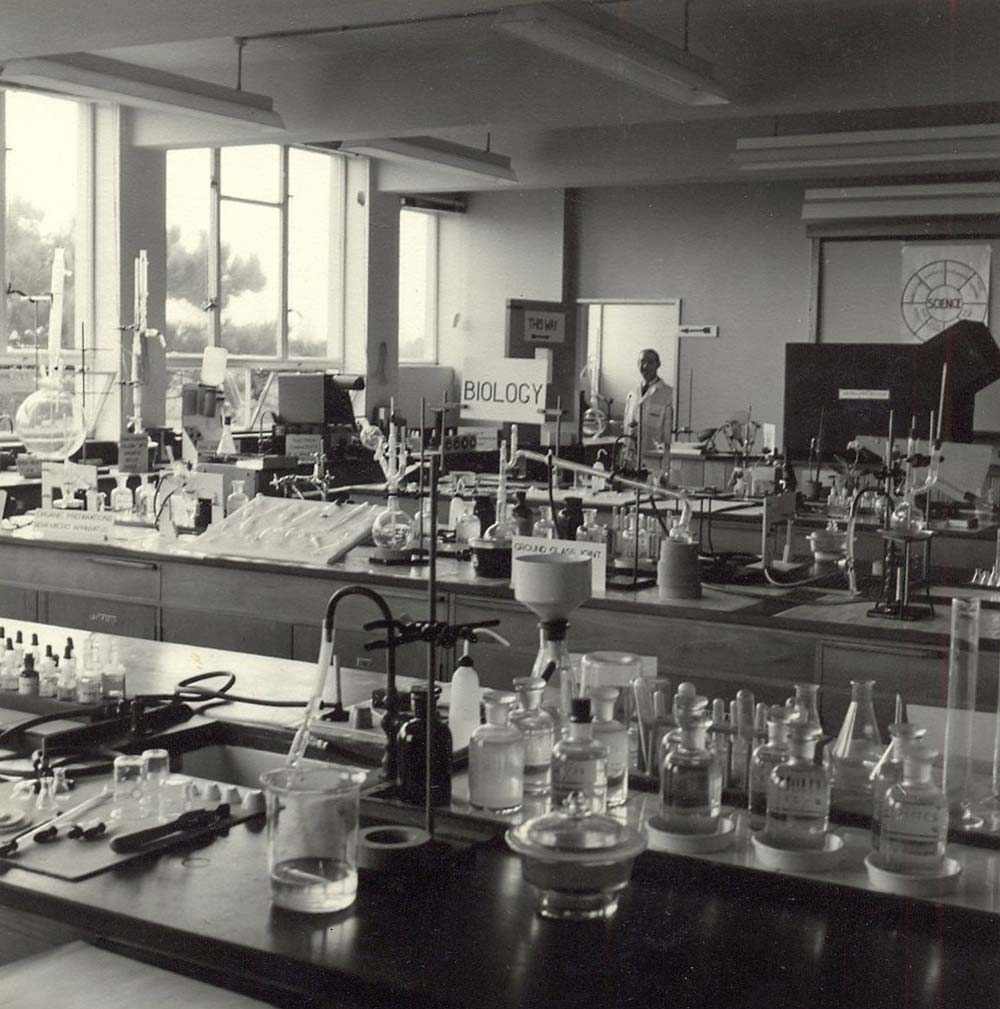
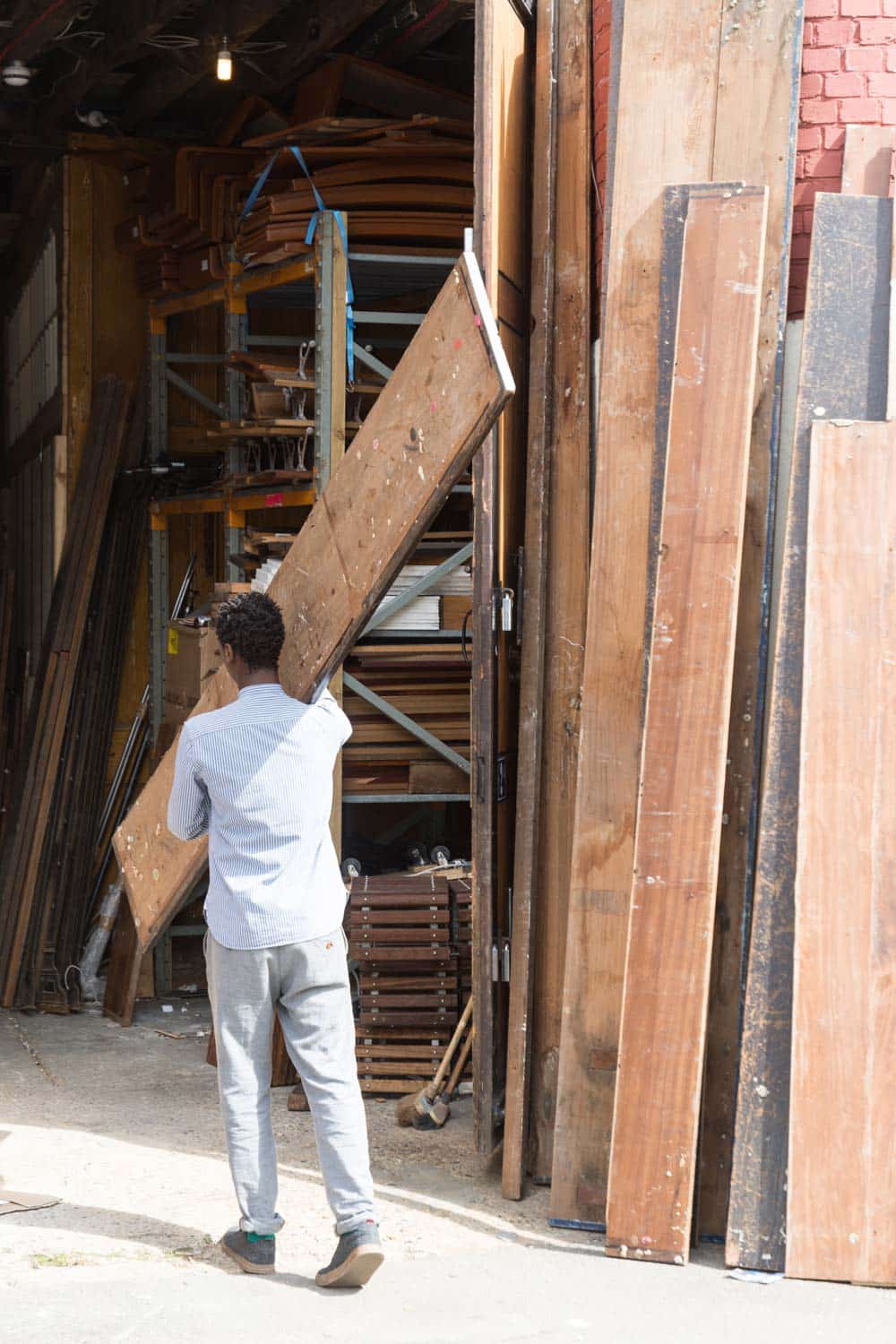
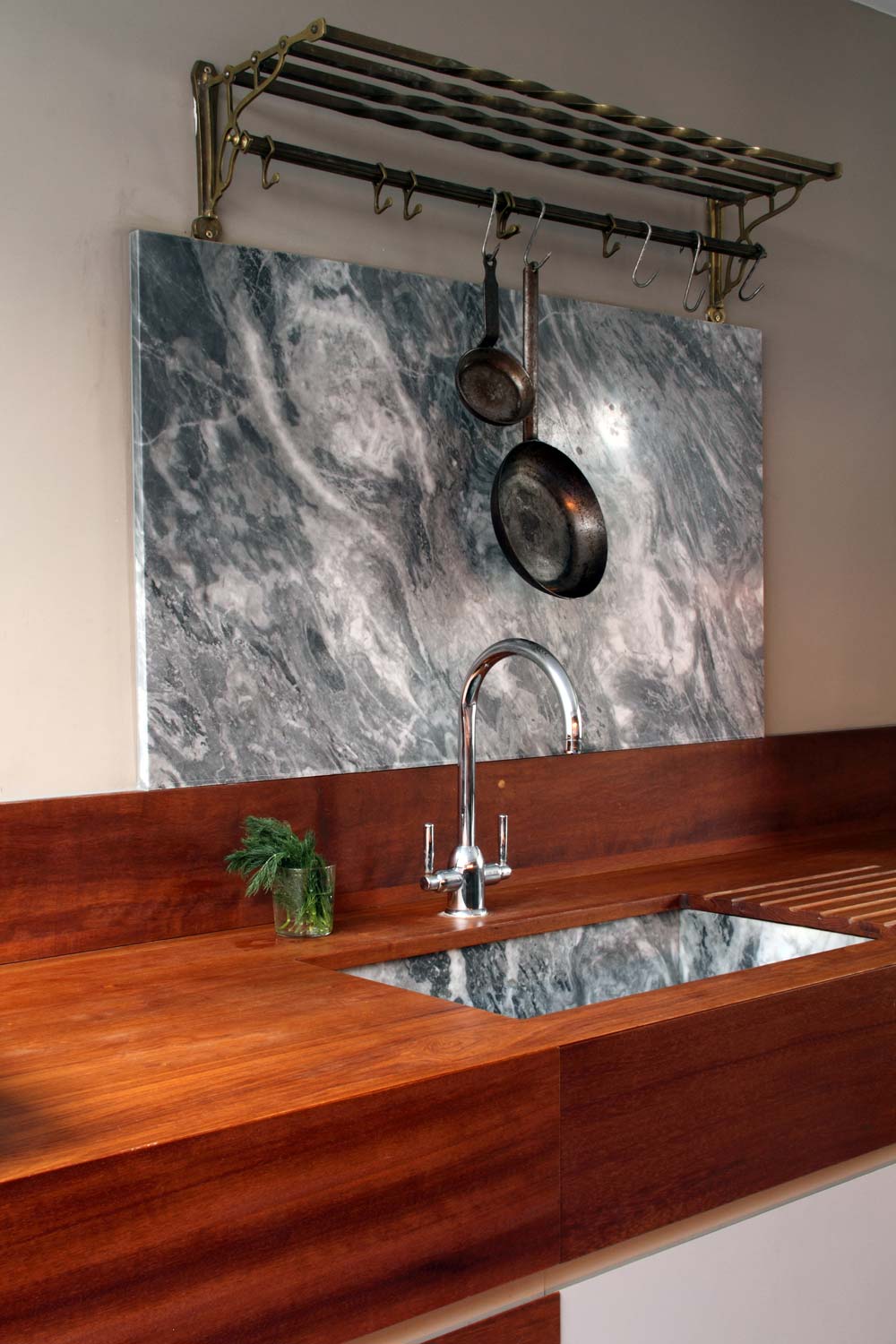
Now recognised as a valuable and finite resource, iroko was originally cut from forests in West Africa early in the 20th Century. All the pieces of timber Retrouvius has sourced are removed from secondary school laboratories as science departments modernise to plastic finishes and furniture.
Tropical hardwoods are extremely durable, versatile and do not require regular treatment with oils and varnish. However, whether your top has been sanded down to expose the rich grain of the wood or if you prefer to leave the scuffs and graffiti or previous life, some aftercare may be required.
These timber tops will age and gain character through use. Intermittently applying a recommended oil or was sealant will maximise the lifespan of the timber finish.
Whilst your new lab top table or kitchen top is inherently hard wearing it will burn on direct contact with hot pans.
Do not leave standing water on the surface of the tops. If you choose to use your worktop as a drainage area for dishes, dry after use. Wipe with a clean, damp, lint free cloth.
As a guide we suggest Bison Was or Osmo Oil as the best treatments. Further care can easily be bought online from BIOFA see www.biofapaint.co.uk