What does salvage mean to you?
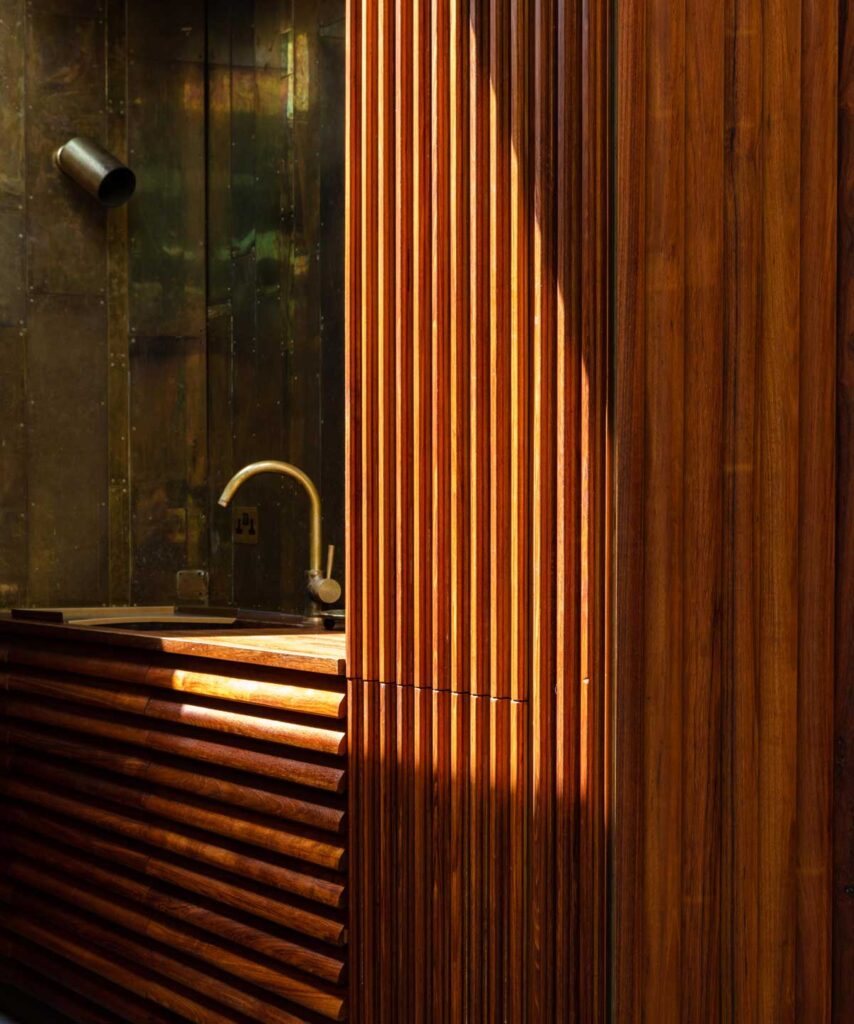
Charlie is quick to distinguish salvage from recycling. “For me,” he says, “salvage is taking something and reusing it in as close to its current form as you possibly can.”
It’s an important distinction. Much of what is described as recycling within the construction industry is, in Charlie’s view, closer to downcycling, breaking materials apart before processing them into something of lower quality, often using significant amounts of energy along the way. Salvage, by contrast, preserves both the embodied carbon and the character of the original material. “I prefer monkeys to tropical hardwood,” he laughs, summing up the environmental argument in one memorable sentence. a sentiment we like to think our readers can agree on!
That philosophy runs through his wider architectural practice. Charlie describes buildings not as permanent objects but as collections of parts with their own histories and futures.
“A building is really just a collection of parts that have come from somewhere and will go somewhere else.”
It’s a way of thinking that encourages architects to design for disassembly rather than permanence. Instead of seeing materials as fixed within a building, they become resources waiting for their next chapter. Alongside reclaimed materials, Charlie champions bio-based alternatives and what he describes as a “warm modern vernacular”: contemporary buildings that feel rooted in natural materials and are expected to age gracefully rather than resist time.
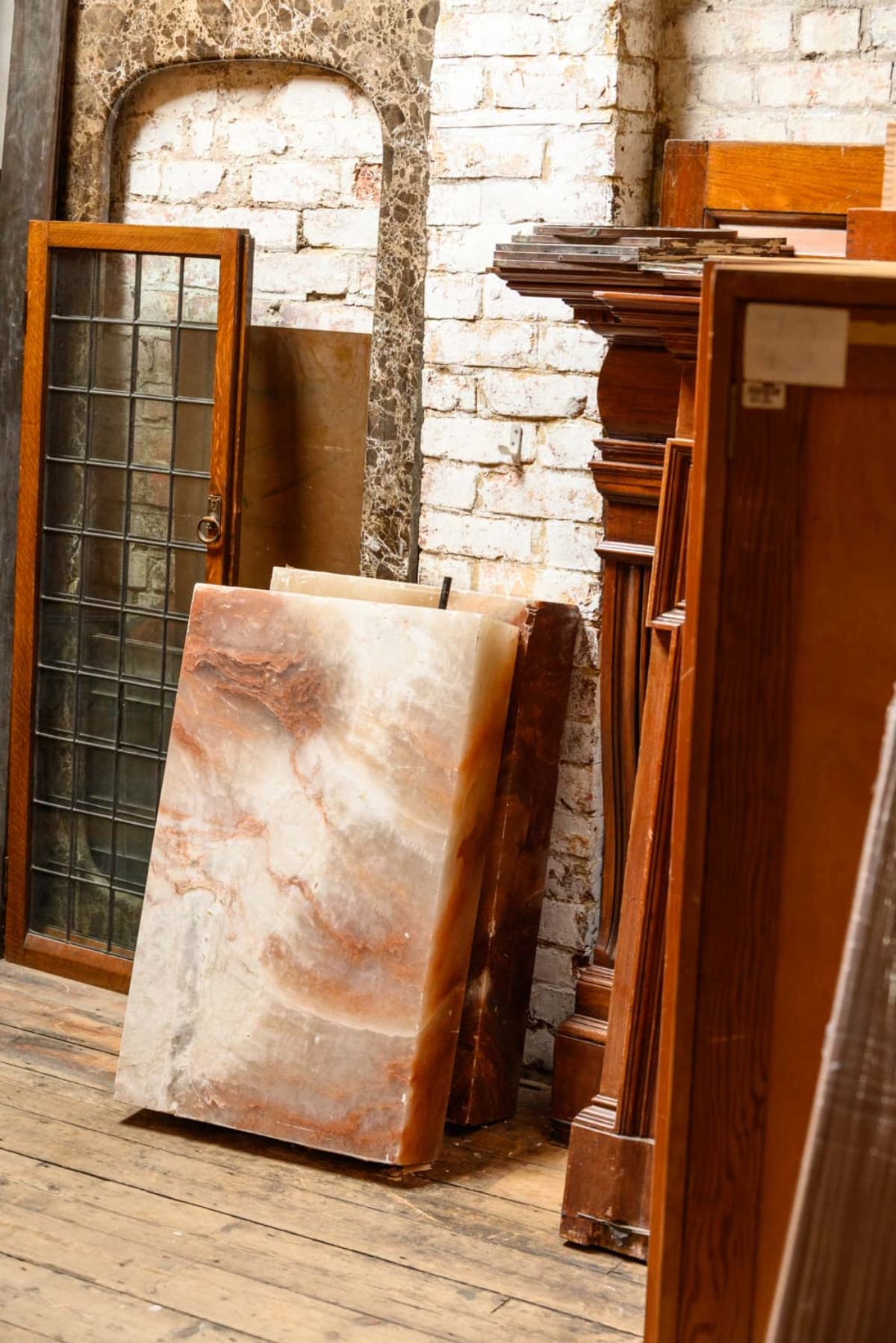
As we wander through the warehouse, Charlie stops beside a glowing block of Derbyshire alabaster salvaged from a church. Held against the afternoon light, the stone almost seems to illuminate from within. It isn’t for sale, much to Charlie’s disappointment, but it serves as another reminder that extraordinary materials often have remarkable previous lives.
How does longevity sit within your practice?
“It’s just so crucial,” Charlie says without hesitation. For him, sustainability has become a word that’s too easily applied to buildings that aren’t designed to endure. A genuinely sustainable building should be capable of adapting over decades, even centuries, without requiring demolition. He talks about flexibility as a design principle, creating buildings that can evolve as people’s needs change. The conversation moves easily between domestic architecture and larger commercial projects, but his priorities remain consistent.
“One of the best things you can do is use second-hand materials.”
Alongside reclaimed materials, Charlie points to timber, wood fibre and other bio-based products as essential components of lower- carbon construction. Yet his thinking extends beyond the building itself. Soil health, planting strategies and landscape design all become part of the same long-term ecological system.
“You can make your buildings completely carbon neutral over twenty or twenty-five years,” he explains, “but only if that thinking is built in from the beginning.” Salvage, he argues, deserves to shed its outdated reputation. “It doesn’t have any connotations of cheapness.” Instead, it’s about recognising the value already embedded within materials and allowing that value to continue rather than starting again.
Tell us about a piece of salvage you’ll never forget.
As a twenty-one-year-old architecture student in London, he bought a single plank of ironwood from a timber yard. The timber had once formed part of a dock in East London, serving as a protective rubbing rail. For twenty-five years it remained with him before finally becoming a bench. “I’d been waiting for the right moment,” he says.
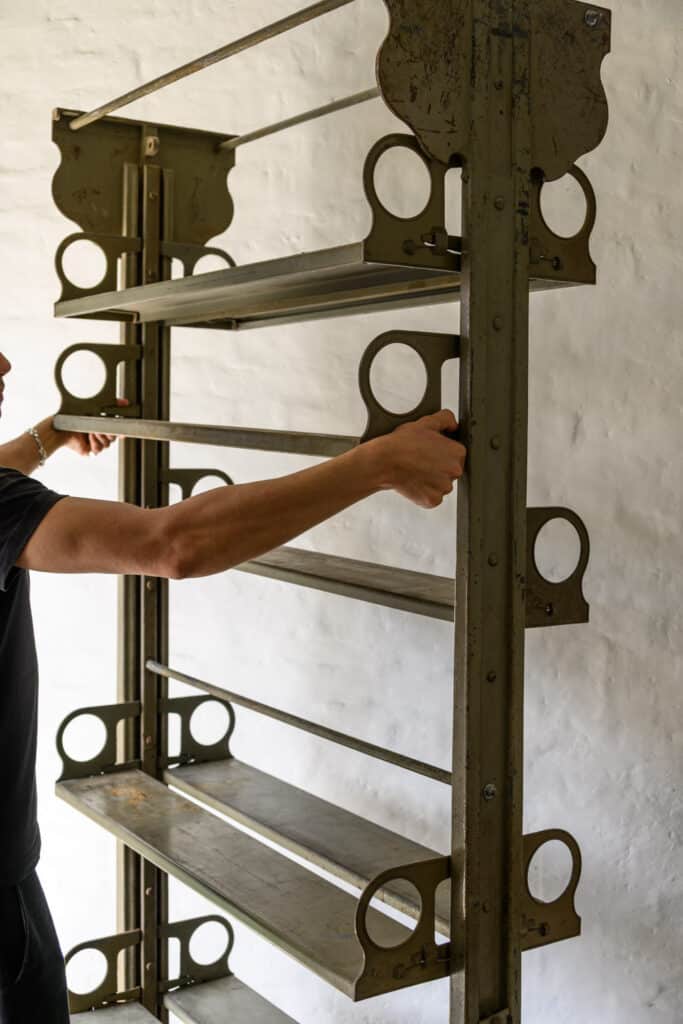
More recently, a set of cast-iron grilles sourced from Adam have been patiently waiting for their own second life. “They’re finally going to become shelving inside a new greenhouse.”
What’s your biggest salvage regret?
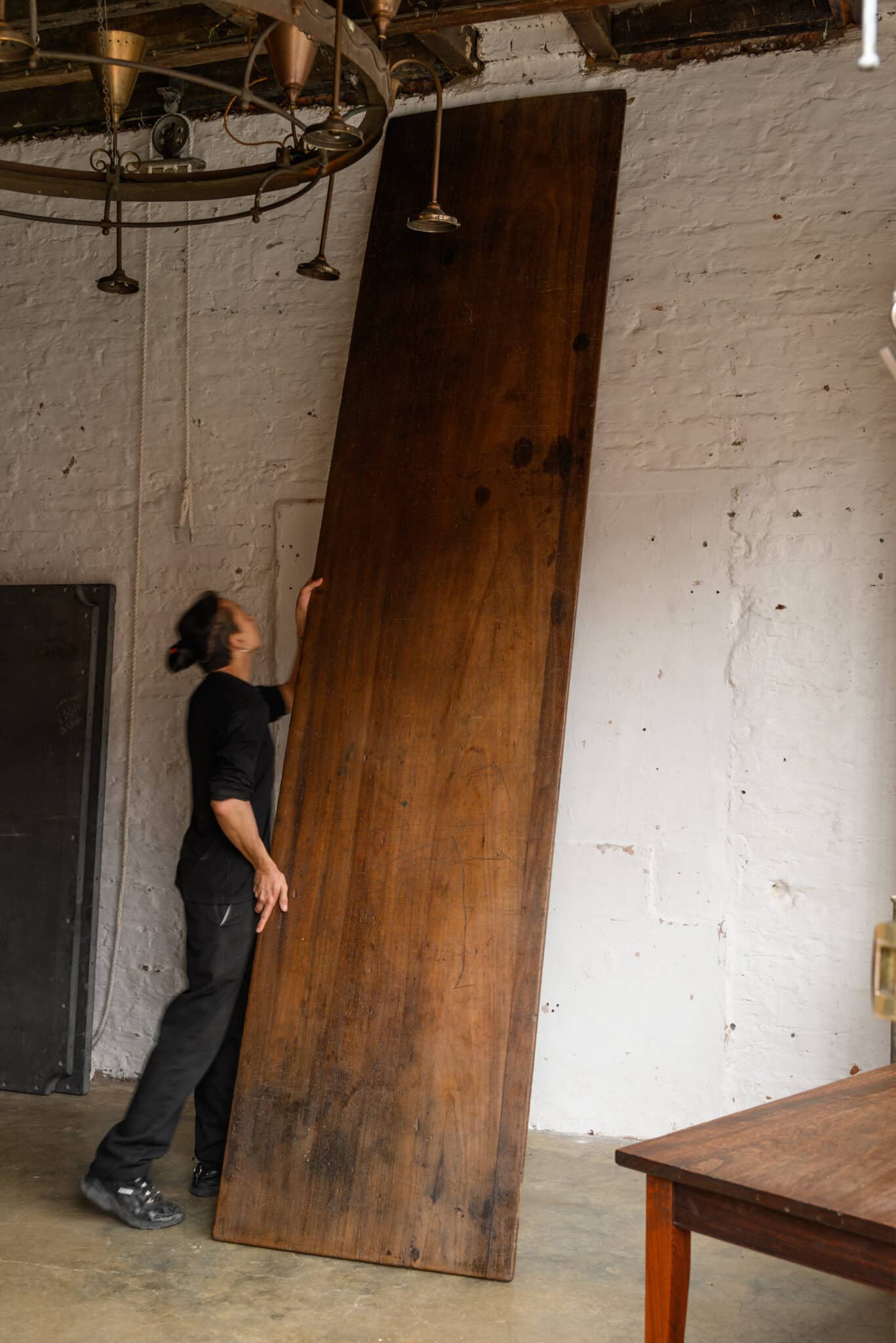
Without much thought, Charlie recalls a single enormous plank of early nineteenth-century teak. Adam had acquired it years ago, around a metre wide and five metres long. Charlie tried to buy it immediately but was told it wasn’t available. “I eventually found out it had been sold to a friend, who turned it into a beautiful dining table,” he laughs. “I think I’ve just about got over it now.”
What should we be preserving more of?
“Everything.” Construction remains one of the most wasteful industries in the economy, yet much of what is discarded still has decades, if not centuries, of useful life remaining. “Very little should be buried in landfill,” he says. “It can be catalogued, sorted and stored for repurposing.”
As the afternoon comes to an end, it becomes clear that Charlie sees salvage as far more than a source of interesting materials. It is a different way of thinking about architecture altogether. Buildings become temporary assemblies rather than permanent monuments.cMaterials become travellers rather than waste. Designing well means thinking
not only about how something begins, but how it might continue long after we’ve finished with it.
“I think you get this this warmth, and you know, this pattern, these kinds of stories, these memories… I genuinely believe with these materials that you pick up on their stories, you know that they’ve been around, and you almost understand that they’ve experienced and seen things, and I personally really value that.”
If Charlie’s optimism is anything to go by, the future of building may depend less on creating something entirely new than on recognising the value of what’s already here.
Stay tuned for the next edition of Taking Stock.