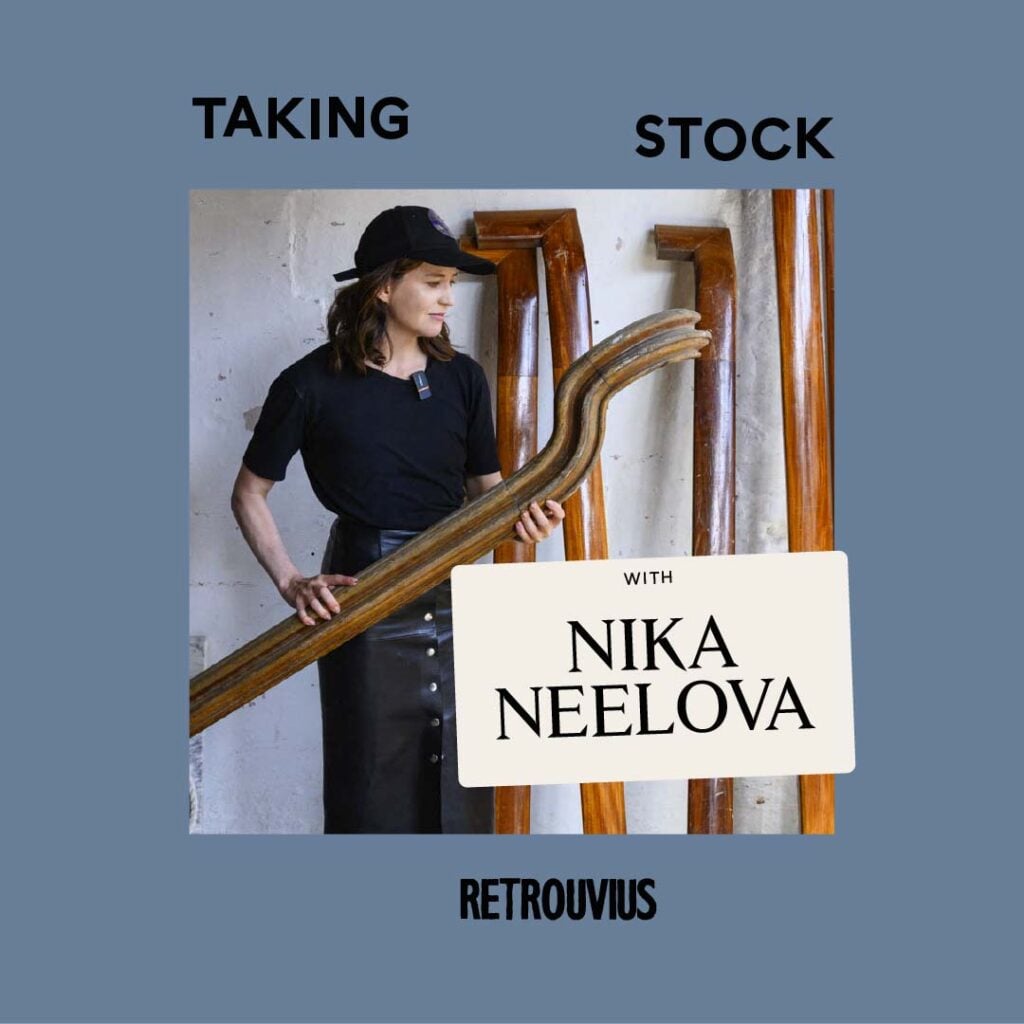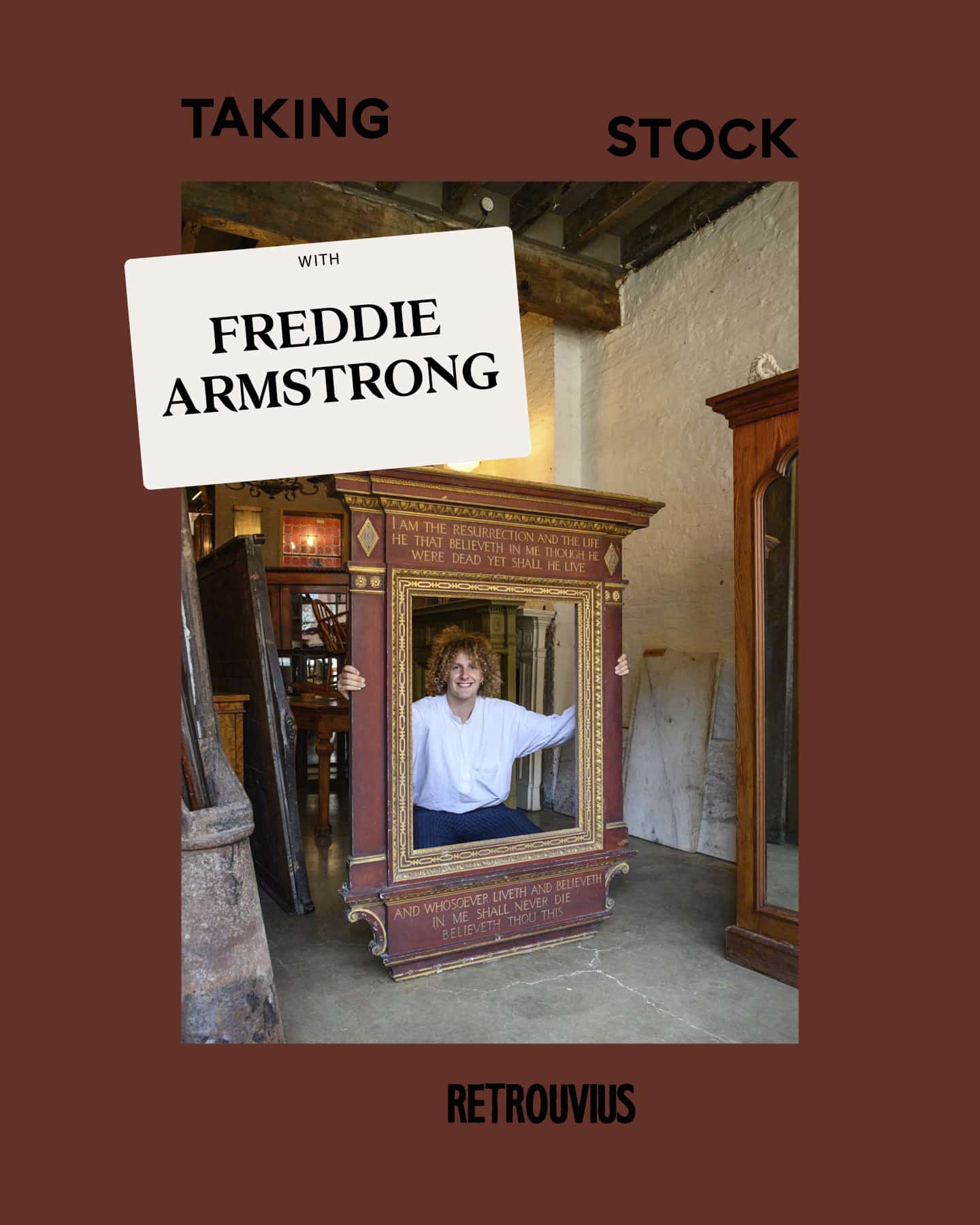
For the latest edition of Taking Stock, Freddie Armstrong of Slow Ways joins Maria and I on a hot afternoon at our shop in Kensal Green, fresh off the heels from his debut exhibition for London Craft Week. Around us, weathered timber, cast iron and architectural fragments wait for their next chapter. A fitting setting for a conversation about restoration, craftsmanship, and the enduring appeal of objects that have already lived many lives.
Freddie is one half of Slow Ways, a pilgrimage of two university grads, walking the length of Britain in support of Quest charity. Travelling at the pace of the landscape, he and his friend (Joe de Ferranti) spent months meeting makers, craftspeople and custodians of endangered traditions, uncovering stories that might otherwise fade from view. I first contacted the pair when they reached Inverness in the summer of 2025. I had seen their videos online and wanted to learn all about the project that became an exploration of salvage in its broadest sense: the preservation of skills, craftmanship, knowledge and connection to place.
What does salvage mean to you?
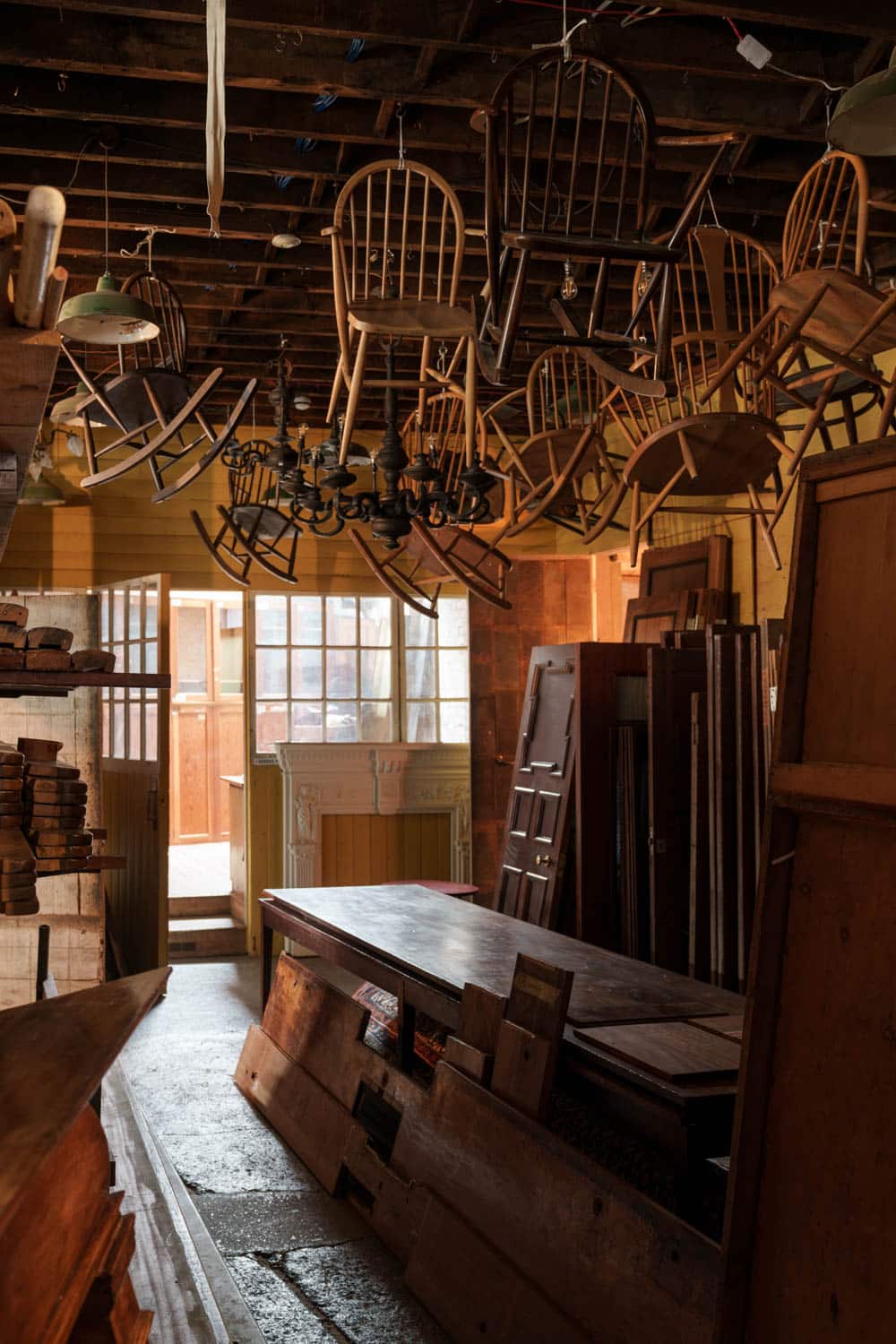
We start our walk through the material warehouse, a room in the back that is full of timber, architectural features and stone slabs. The smell of aged varnish is not dissimilar to being on a traditional sailboat.
“When I hear salvage,” Freddie says, “I always think of a shipwreck. People paddling on barrels attempting to save what they can.” It’s a striking image. For Freddie, salvage is about far more than reuse.” He says;
“I find it deeply satisfying knowing you can rescue something beautiful from being lost forever. Repurposing material, taking another’s waste or offcuts, and at the end having a completely unique piece of history that is part of a story. It’s exciting.”
That idea of rescue runs throughout our conversation as we weave between wooden handrails and piles of doors. Salvage isn’t simply about extending the life of an object; it’s about recognising value where others might not. A fragment, an offcut, a discarded piece of furniture, each carries a story worth preserving.
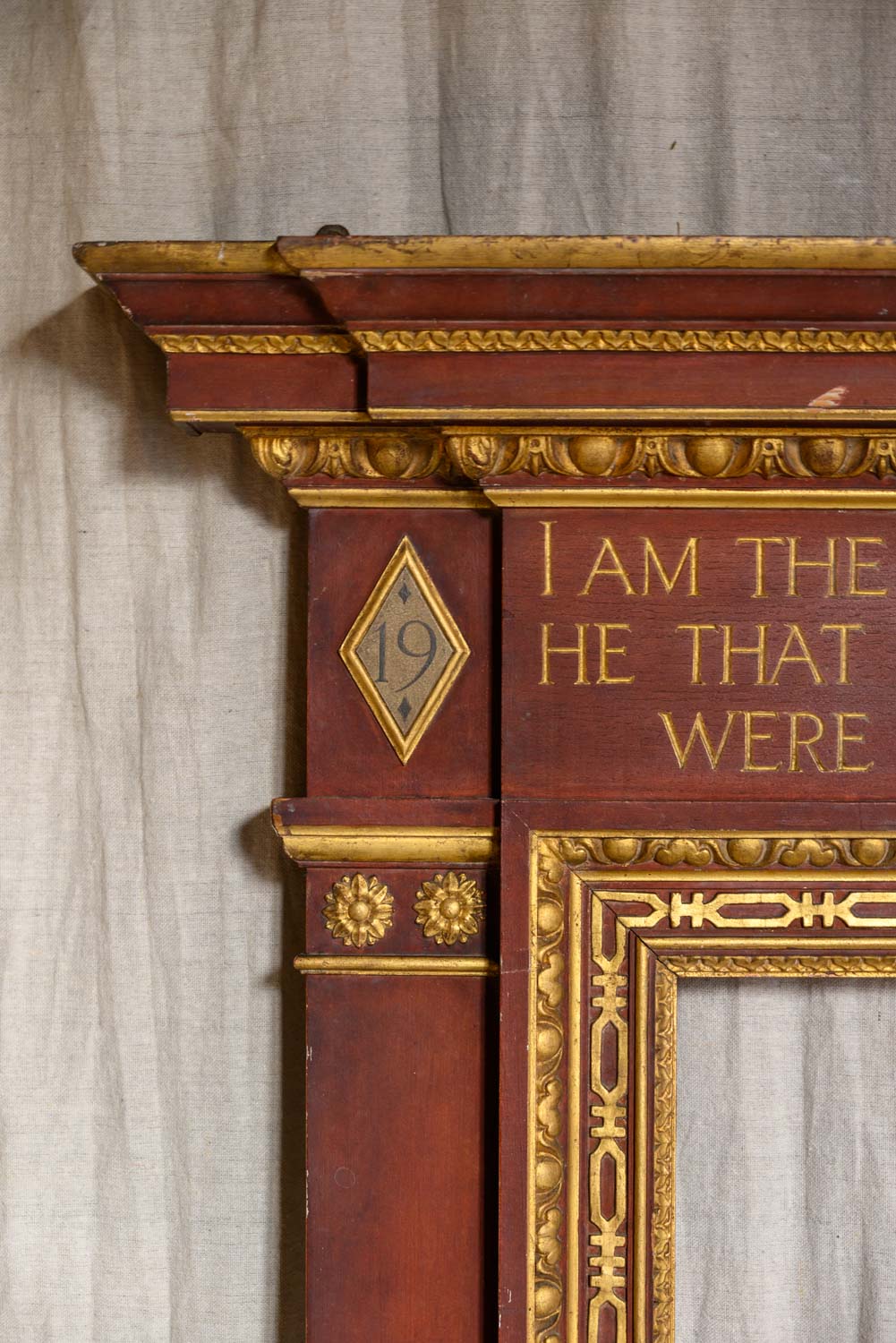
Freddie trained as a gilder and restorer in Florence, specialising in historic picture frames. It’s there, surrounded by centuries of craftsmanship, that his fascination with material memory deepens. “The things that get me most excited are where time has had some sort of effect on the surface,” he says. “Silver oxidises, varnish chips away, gilding rubs thin revealing the coloured clay pigments underneath. I think there’s something really lovely about what time can do to objects.” For Freddie, these changes aren’t imperfections. They’re evidence of an object’s journey.
What makes something worth keeping for the long term?
“Objects and furniture made today can often be very surface level, quite literally,” he says. “They may be beautifully finished but with time they expire, as the cheaper materials are revealed underneath.” It’s a contrast that speaks to a wider culture of disposability. Much of what surrounds us today is designed for replacement. “I’m so drawn to old furniture and old objects,” he says. “They only get better with age. They last, but also take on character. There is no expiry date. In that sense they are timeless.” His enthusiasm for historic frames is infectious. Many remain structurally sound centuries after they were made, while their surfaces tell quieter stories of handling, atmosphere and time. Freddie is ecstatic as he spots a very large decorative church frame from the Lutyens era, stacked in front of the mirrors:
“Nothing beats the patina you get from age,” he says. “The colouring effects you get from baroque frames are spellbinding.”
Looking around the warehouse, it’s hard to disagree. The materials that draw people here often share the same quality: worn edges, softened surfaces and marks of use that can’t be manufactured or replicated.
What is your most prized piece of salvage?
Freddie doesn’t hesitate. His mind goes straight to a flea market in Arezzo, near Florence, where broken frames, damaged mirrors and forgotten fragments sit piled high among market stalls. Among them, he spots an object in pieces. Covered in woodworm dust and barely recognisable, it looks destined to be overlooked.
“It’s treasure hunting,” he says. “I bought it for €25, took it back to the workshop, disinfected it, and pieced it together… Now I’ve got this amazing altar candlestick that would once have sat in a church in Italy. That is why it’s so deeply satisfying.” I agree, the appeal lies not only in the object itself, but in the addictive process of uncovering it. Seeing potential where others see waste. Piecing together a story that might otherwise have been lost.
What role do heritage crafts play in restoration?
As the conversation moves from objects to the people who make and restore them, Freddie’s focus widens.
“Both restoration and heritage crafts are bound by time and the values that time brings,”
The Slow Ways journey took Freddie and Joe across the Scottish Borders, where they visited Marchmont Workshop. There, craftspeople continue the tradition of rush-seated chair making through apprenticeship schemes supported by the Hugo Burge Foundation. “It is often new work, new designs, but with skills that are centuries old,” he says. “They are heirloom pieces that take time to make and are built to last.”
For Freddie, the loss of these skills reaches beyond the disappearance of objects alone. “Beyond the risk of losing the skill, there is also the ecological management of land that that requires skill, and the cultural importance of that craft. Much like salvage, our support for the crafts we have on this island is essential to our identity.” It’s a reminder that craft rarely exists in isolation. The materials, landscapes and traditions that support it are often inseparable from the finished piece itself.
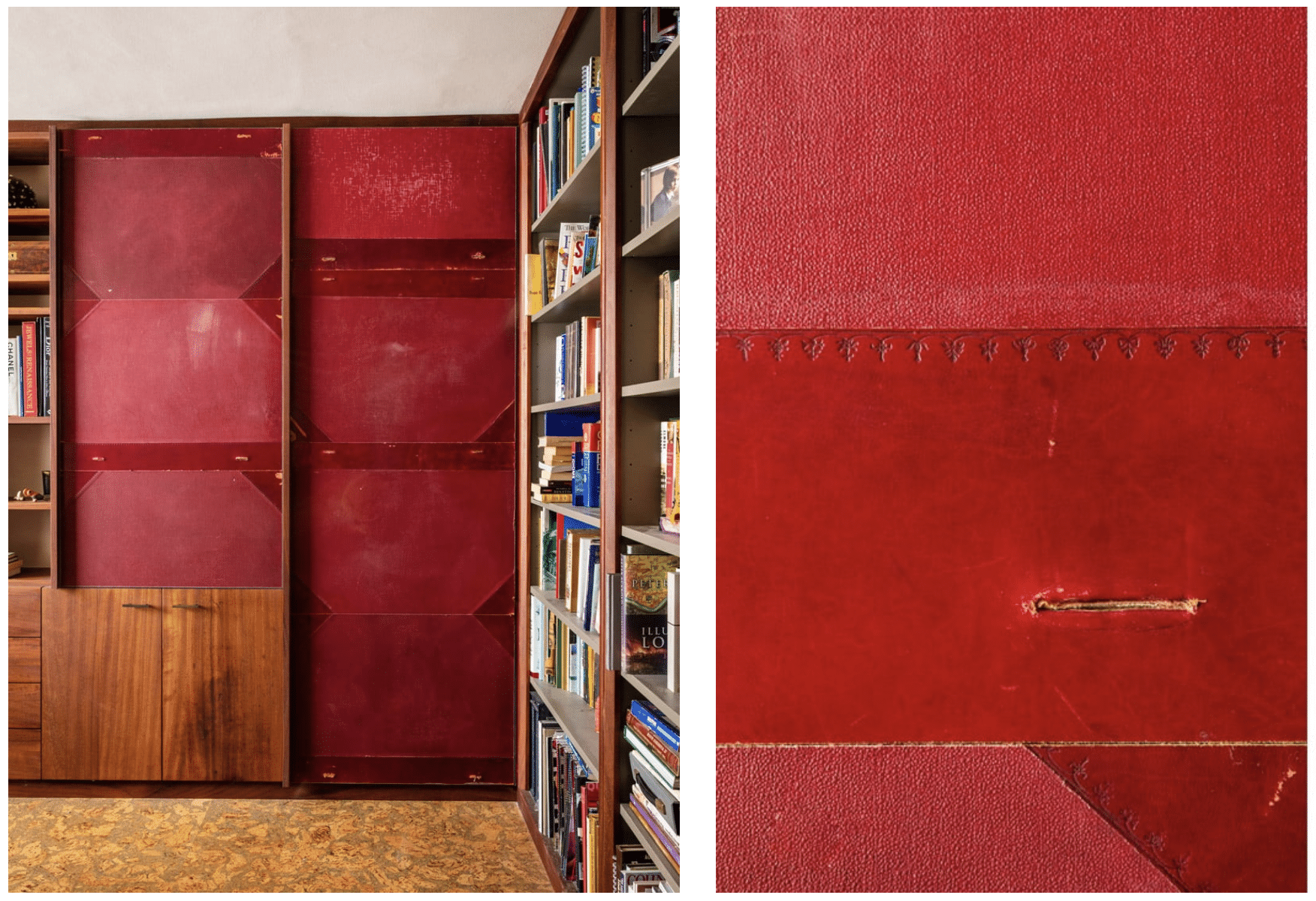
As we tread up the narrow staircase to the top floor, Freddie points out the worn red leather panels on the corner wall, loving their worn patina. Maria explains that they are Victorian folio cases reclaimed from a London Museum and would have once been full of drawings and prints, but also that she has used them in a few of her interior design projects within the joinery: image of folios…
What do we gain by designing more slowly and living with things for longer?
As the afternoon unfolds, our conversation returns again to the value of time. Not efficiency or speed, but the slower rhythms that sit behind making, growing and caring for things over the long term.
“Making, growing, storytelling, singing, walking all support one another,” Freddie says. “They are rituals that bind us to the land, using it for both material and inspiration. They honour natural timeframes.”
In a culture increasingly shaped by convenience and replacement, it’s a perspective that feels refreshingly grounded. Perhaps that’s what salvage means at its best. Not simply rescuing an object, but carrying forward the stories, skills and traditions that give it meaning.
Freddie is continuing to give meaning to objects through his most recent venture, Heirloom by Slow Ways Studio, a place to find antique picture frames, contemporary craft collaborations. – link to website – https://heirloom.slowwaysstudio.com/
Stay tuned for the next edition of Warehouse Conversations.
Words by Iona McVean